Keywords: need-led innovation, product design, medical device, surgical tool, ENT
Client: © InnAccel Technologies
Role: Design internship (Undergraduate thesis project)
Deliverables: Alpha prototype and cadaver studies
A study on unmet clinical needs in the field of Otorhinolaryngology in India by Chachra et al. (2018) found safer and effective ways to treat sinusitis as an important focus area for innovation in India (2nd and 3rd needs out of 198 identified needs). Chronic Rhinosinusitis (CRS) is the inflammation of the sinus wall or blockage of the sinus ostia. The blockage leads to the collection of fluid in the sinuses, creating a breeding ground for infections. If left untreated, the infection can cause severe pain, morbidity and lead to further complications.
In the case of structural deformities such as narrow sinus ostia and nasal polyps, or due to underlying immuno-deficient conditions, the pharmacological management of CRS has limited benefits for patients. In India, patients are typically referred for a functional endoscopic sinus surgery (FESS) to drain the sinuses and increase the size of the ostia to prevent a blockage in future. However this procedure leads to a damaged nasal lining which requires post-procedural treatment, and patients have been found to continue requiring long-term pharmacological management. Furthermore, due to the high cost of a FESS and the requirement of general anaesthesia, patients tend to delay the procedure, risking further complications.
The alternative to a FESS is balloon sinuplasty, a procedure utilizing a small balloon dilated at the sinus ostia to expand the osia without damaging the nasal lining. But this procedure is not very common in India, costing three-times more than a FESS. Furthermore, few ENT surgeons have been trained to conduct this procedure in India.
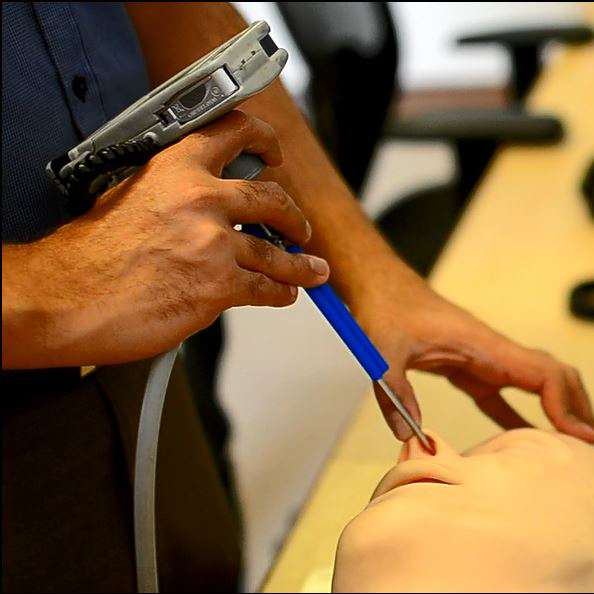
This project focused on the development of an affordable and accessible balloon sinuplasty toolkit for patients of CRS. My design responsibilities involved the development of a provisional patent of the solution through three iterative rounds of design and development to arrive at an alpha prototype. Each iteration involved ideation, concept development and prototyping, with the final two rounds undergoing cadaver studies. The cadaver studies were able to successfully test all stages of the procedure, including endoscopic survey of the nasal cavity, identification of the sinus ostia, deployment of the balloon in the sinus ostia, inflation of the balloon to widen the ostia, and the safe removal of the tools from the nasal cavity.
The product was successfully commercialized in October, 2017. All rights remain with InnAccel Technologies.
Publications
Arun Kumar, P. (2015). Sinucare – Biomedical product system innovation for Chronic Rhinosinusitis, (BDes thesis) National Institute of Design, Ahmedabad, India.
References
Chachra, P., Chaturvedi, J., Rodrigues, D., Jangir, R., Sirdesai, R., Tauheed, A. S., DSouza, R., Pappu, R. (2018). Identification of Unmet Clinical Needs in the Field of Otorhinolaryngology in India – A Modified Biodesign Approach. Glob J Otolaryngol 15(1) 18&ndash22. DOI:10.19080/GJO.2018.15.555904. Retrieved from https://juniperpublishers.com/gjo/pdf/GJO.MS.ID.555904.pdf